The steady shift from modern cameras to traditional film in the recent years
| BY SHANNON ELIAS | MAY 27, 2026 |
A generation raised on iPhones, instant uploads, and artificial intelligence is now spending hundreds of dollars on grainy disposable cameras, expired film stock, and vintage point-and-shoots older than they are. In a world obsessed with speed and perfection, younger photographers are unexpectedly moving backward; trading digital convenience for analog imperfection.
Film photography has become more than a trend. It has become a reaction to the dull feel of modern digital culture.
The Appeal of the Analog Process
Unlike digital photography, film forces patience, which can be hard living in a world fueled by convenience. There is no LCD screen to immediately review every shot, no endless burst mode, and no guarantee that every image will come out perfectly. For younger generations constantly surrounded by instant gratification, film creates a slower and more intentional experience.
“There is more to life than increasing its speed.” – Mahatma Gandhi
Every frame matters.
That limitation is part of the appeal. With only 24 or 36 exposures on a roll, photographers become more present in the moment and more careful with composition. The process feels personal instead of robotic.
Mechanical film cameras also provide a tactile experience that many modern digital cameras lack. Turning physical dials, advancing film manually, and hearing the shutter click creates a connection between the photographer and the image being captured. Compared to the smooth, almost overly processed feeling of smartphone photography, film feels raw and authentic.
Film also embraces imperfection. Light leaks, grain, blur, dust, and chemical inconsistencies create images that feel organic and human. What digital photographers once tried to remove has now become part of the aesthetic younger audiences actively seek out online.
Ironically, the flaws are what make the images feel real. A new sense of reality.
The Rise of “Authenticity” in an AI World
As artificial intelligence becomes more advanced, it has become increasingly difficult to tell what images are real online. AI-generated portraits, automated photo editing, beauty filters, and heavily processed smartphone cameras have created a digital environment where perfection feels forced.
Because of this, younger generations have started valuing raw authenticity more than perfection. A photo speaks a thousand words, yet they are all covered up by retouching and airbrushing.
“A diamond with a flaw is worth more than a pebble without imperfections.” – Confucius
Film photography represents something that cannot be fully replicated by AI. Every frame contains unpredictability and physical flaws that prove a real moment existed behind the camera. While AI can imitate film grain digitally, it cannot fully recreate the emotional connection people associate with film photography.
For many creators, film has become a way to separate themselves from content that feels manufactured.
This shift can also be seen across creative industries like graphic design, fashion, and social media. As AI tools continue automating parts of the creative process, many artists worry about losing originality and personal expression. Film photography pushes against that idea by emphasizing human error, experimentation, and individuality.
In many ways, the return to film is not just about photography, it is about reclaiming creativity in a world increasingly dominated by algorithms.
Social Media’s Unexpected Influence
Although film photography represents a rejection of digital culture, social media ironically helped revive it.
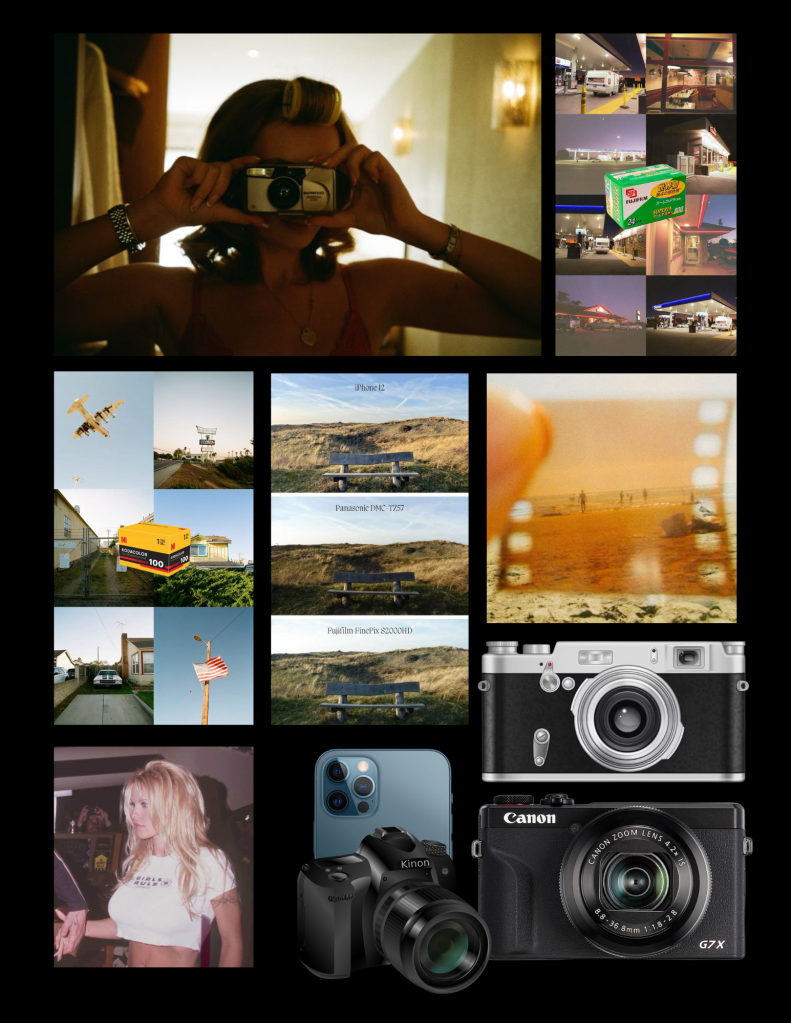
Platforms like TikTok and Instagram popularized the nostalgic aesthetic associated with disposable cameras and vintage film stocks like Kodak Portra and Fujifilm Superia. Influencers, fashion photographers, musicians, and celebrities began posting grainy flash photos that contrasted sharply with polished digital content.
Suddenly, imperfect photos felt more emotionally believable than perfectly edited ones.
The popularity of compact cameras such as the Canon Sure Shot or Contax T2 exploded online, while Fujifilm digital cameras gained attention for their built-in “film simulation” settings that recreate classic film looks without the recurring cost of developing film.
This trend has blurred the line between digital and analog photography. Modern digital cameras are now intentionally trying to imitate the color science, grain, and imperfections that older technology naturally produced decades ago.
The Cost of Shooting Film
Despite its popularity, film photography is far from practical.
Film stock prices have risen dramatically over the past several years, and developing costs continue increasing as fewer labs remain open. A single roll of film can easily cost more than an entire month of unlimited digital shooting.
However, many younger photographers see that expense as part of the experience. Paying for every frame makes photography feel more meaningful and intentional. Instead of taking hundreds of photos and deleting most of them later, film photographers often spend more time considering lighting, composition, and timing before pressing the shutter button.
The slower pace changes the relationship people have with photography itself. Slow down, and take in the beauty that surrounds you.
Why Film Continues to Matter
Technology will continue becoming faster, sharper, and more artificial. Cameras powered by AI will continue enhancing faces, correcting lighting, and generating nearly flawless images instantly. Yet younger generations continue gravitating toward photography methods that are slower, imperfect, and unpredictable.
Film photography represents something many people feel is disappearing online: authenticity. In a world that focuses so much on perfection, imperfection has started to feel human again.
“I like the mistakes. They’re what make film human.” – Tom O’Hara, street photographer
 COMM380 | DIGITAL MEDIA WRITING
Leave a comment